

For restaurants, takeout businesses, and food delivery services, disposable cutlery-while seemingly a minor item-directly impacts the consumer experience, procurement costs, and the overall food packaging strategy.
For a long time, plastic knives have been widely used in fast food, takeout, and general foodservice due to their low cost, standardized specifications, and mature production processes. However, as more foodservice businesses move to reduce their reliance on traditional single-use plastics, disposable wooden knives are increasingly emerging as a viable alternative.
I. Wooden Knives vs. Plastic Knives
For B2B buyers, the most critical factor is how a product performs in real-world use.
| Comparison Criteria | Disposable Wooden Knives | Disposable Plastic Knives |
| Primary Material | Natural wood (e.g., birch) | Plastics (e.g., PP, PS) |
| Cutting Performance | Suitable for soft to medium-hard foods | Consistent performance; depends on structural design |
| Heat Resistance | Suitable for a variety of hot food applications | Varies based on the specific type of plastic |
| Behavior Under Heat | Does not melt like conventional plastic | Some plastics may soften or deform at high temperatures |
| Appearance | Natural, minimalist, with visible wood grain | Highly uniform in color and appearance |
| Environmental Profile | Plant-based; disposal/recycling depends on the product and local facilities | Typically derived from fossil-fuel-based resources |
| "Plastic-Free" Status | Can align with "plastic-free" product initiatives | Not suitable for "plastic-free" initiatives |
| Common Applications | Takeout, catering, cafés, banquets, hotels | Fast food, takeout, catering, event dining |
| Brand Image | Well-suited for brands emphasizing nature, sustainability, or premium positioning | Traditional, standardized |
| Packaging Compatibility | Pairs well with eco-friendly packaging like kraft paper or cardboard boxes | Highly versatile; compatible with a wide range of packaging |
It is important to note that the performance of a knife is not determined solely by its material.
Factors such as wood quality, product thickness, blade design, manufacturing precision, and surface finishing all influence the final performance of a disposable wooden knife.
Therefore, when selecting a supplier, B2B buyers should look beyond the material itself and investigate product specifications, manufacturing processes, and quality control standards.
II. Cutting Performance
Cutting performance is one of the primary concerns for buyers when selecting wooden cutlery. Key factors to consider include:
Blade Thickness
Increasing the blade thickness appropriately enhances overall rigidity, reducing the risk of the utensil bending during use.
01
Blade Structure
The shape, angle, and manufacturing method of the blade influence how easily it can cut through food.
02
Handle Structure
An appropriately designed handle width and structure improve the user experience, allowing for more even application of force.
03
Wood Quality
The stability, grain, and processing condition of the raw material all affect the quality of the final product.
04
Surface Finish
Wooden cutlery should have a smooth surface, free from burrs, cracks, or prominent wood splinters.
05
III. Heat Resistance
In daily food service, many items are served to consumers at high temperatures. Different types of materials (such as various plastics) possess varying levels of heat resistance. When exposed to high temperatures, the performance of plastic cutlery depends on the specific type of plastic used and the product's structural design.
Wood, by contrast, possesses different material properties; it does not melt like plastic when subjected to heat. Consequently, wooden cutlery offers a more stable user experience for hot food takeout and delivery services.
However, rather than relying solely on the "wooden" label to gauge performance, purchasers should conduct further testing based on the product specifications provided by suppliers and the intended real-world application.
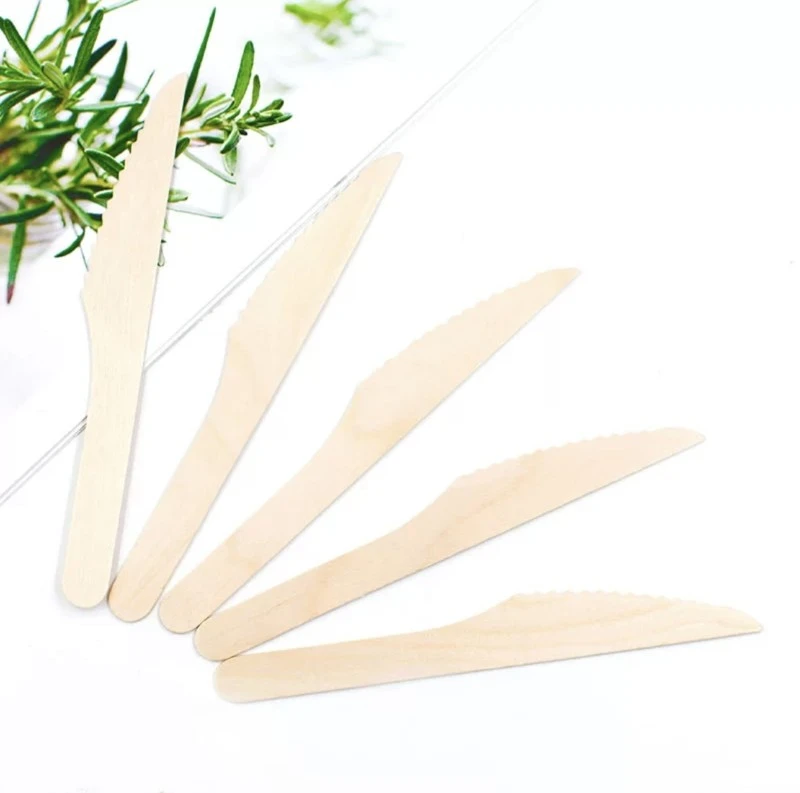
IV. Environmental Friendliness
Environmental impact is currently the most significant differentiator between wooden and plastic cutlery.
- Traditional plastic cutlery is typically derived from petrochemical resources and is intended for single-use consumption.
- Wooden cutlery is made primarily from wood-a plant-based material.
For food service businesses looking to reduce their reliance on traditional single-use plastics, wooden cutlery offers an alternative. It is important to note, however, that the ultimate environmental outcome-in terms of disposal-depends on various factors, including the specific material composition, the presence of any coatings, product certifications, and local waste-sorting systems.
Therefore, B2B purchasers should not rely exclusively on "eco-friendly" labels; instead, they should evaluate the product holistically, considering its entire lifecycle-from raw materials and production to usage and final disposal.
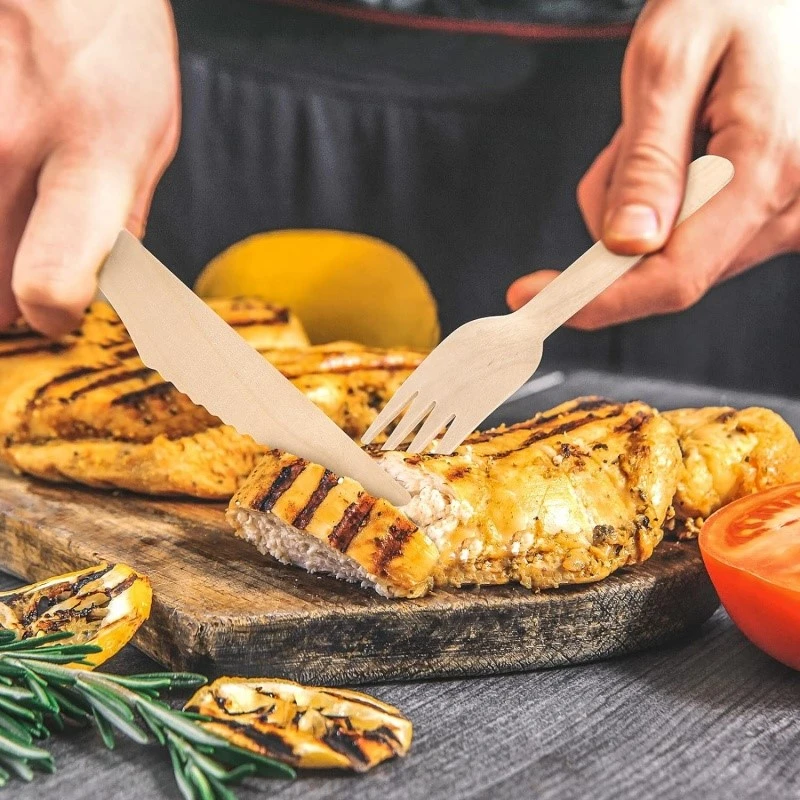
V. Which Food Service Scenarios Are Best Suited for Wooden Cutlery?
Not every food service operation requires the exact same type of single-use cutlery. A more prudent approach is to select items based on the specific menu and the environment in which they will be used.
Takeout and Food Delivery
Wooden cutlery pairs well with:Kraft paper containers, bagasse (sugarcane fiber) containers, paper bowls, and paper bags, creating a cohesive, eco-friendly takeout packaging solution.
Cafés and Bakeries
For relatively soft food items-such as cakes, desserts, sandwiches, and bread-wooden cutlery is generally sufficient to meet basic functional needs.
Restaurants
For common dishes like rice, pasta, cooked vegetables, and certain prepared meats, appropriate wooden cutlery can be selected based on specific product dimensions and design.
Banquets and Event Catering
Weddings, trade shows, outdoor events, and large-scale banquets often require significant quantities of single-use cutlery, which can be assembled into complete, coordinated dining sets.
For restaurants, takeout businesses, caterers, and tableware distributors, the most prudent procurement approach goes beyond simply comparing materials; it involves conducting practical tests based on your specific menu, usage scenarios, target market, and brand positioning.
Selecting the right wooden knife begins with choosing the right manufacturer.
If you are looking for a supplier of disposable wooden cutlery, Shuntong offers wooden knives, forks, and spoons, as well as bamboo tableware, bagasse-based (sugarcane fiber) tableware, and customized food packaging solutions.
Please feel free to contact us to request product samples, detailed specifications, or to discuss OEM/ODM customization options.